When you start a new project, "How are you going to store the data?" is one of the main questions. To answer this, we should evaluate our project regarding data structure, scale, query complexity, and schema flexibility. So I'll explain how each factor works for SQL and NoSQL databases and clarify the decision algorithm for this task at the end of this article.
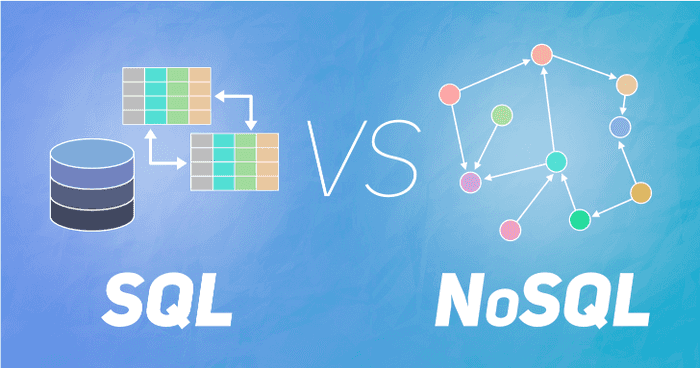
SQL and NoSQL Data Structures
SQL stands for "Structured Querry Language" which means storing data by well-structured tables and these tables connected with relations. These relations are provided by multiple keys, such as primary&foreign keys. When we query the data, we sometimes use these relations and the keys.
There is tons of flexibility and dynamism with data when it comes to NoSQL(Not only SQL). However, there is no relation between collections (basic tables in SQL). These collections consist of data objects(JSON or BSON objects), reminding more dynamic versions of table fields in SQL.
Scalability Of SQL and NoSQL Databases
SQL and NoSQL databases scale differently, so you're going to have to understand " How your data set is going to expand in the future? ".
SQL databases scale vertically, meaning that to scale the database, you'll need to increase the capacity of a single server (increasing the CPU, RAM, or SSD). To preserve the integrity of the data, SQL databases have been built to operate on a single server, so they are not easy to scale.
NoSQL databases expand horizontally, ensuring that more servers can be added to power the growing database. This is a considerable advantage NoSQL has over SQL in large-scale applications.
Query Complexity & Schema Flexibility
The next thing to consider is how much your information will be queried, how easily you need to run queries, and who is responsible for running these queries.
Since your information is nicely structured and ordered, complex queries are often used in a SQL database.
SQL is a popular language for programming that has been around for more than 45 years, so it is highly mature and well-known. It effectively executes queries and rapidly retrieves and edits data, and it's very light and declarative, so it's easy to understand. Cause of having "Structured Query Syntax," it also less differs throughout different database engines.
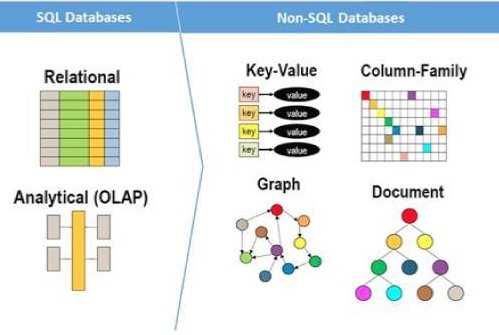
On the other hand, NoSQL databases have complex unstructured data schemas, and data is stored in several ways: they can be column-oriented, document-oriented, graph-based, or organized as a key-value store.
You do not need to define their structre and you can grow your structre as you go
Each document can have its own unique structure
There is no standard for syntax
When You Should Go With SQL
As mentioned above, SQL databases are the perfect match for applications such as customer relationship management tools, accounting software, and e-commerce platforms that are transaction-oriented. Each row is a separate entity (e.g. a client) in a SQL database, and each column is an attribute that defines that entity (e.g. address, job title, item purchased, etc.).
Due to these distinct, structured relationships in a table between rows and columns, when you need ACID compliance, SQL databases are best. ACID stands for:
Atomicity: – each transaction either succeeds completely or is fully rolled back. Consistency: – data written to a database must be valid according to all defined rules. Isolation: – When transactions are run concurrently, they do not contend with each other, and act as if they were being run sequentially. Durability: – Once a transaction has been committed to the database, it is considered permanent, even in the event of a system failure.
ACID compliance protects your records' integrity, which is crucial for transactions requiring databases. SQL database provides us with precise columns and rows with perfect synchronization, which will prevent mistakes and ensure transaction validity.
If your data is well organized and ACID compliance is a must, a SQL database is the solution for your project.
What's NoSQL Best For
A NoSQL database is a much better fit for storing information that would not fit neatly into a table, such as article content, social media messages, sensor data, and other forms of unstructured data. With simplicity and scalability in mind, NoSQL databases have been constructed and adopt the BASE consistency model, which means:
Basic Availability: This means even database ensures the availability of the data, you may not able to access data, in case of a changing or inconsistent data structure.
Soft State: The state of the database can change over time.
Eventual Consistency: Eventually, the database will become consistent, and at some stage in the future, data will spread everywhere.
The most important factor in deciding whether to use a SQL or NoSQL database is the architecture of your data, so before making a decision, it should be considered.
Just for heads up, There are also some NoSQL databases that are ACID compliant. You can read more about here.